
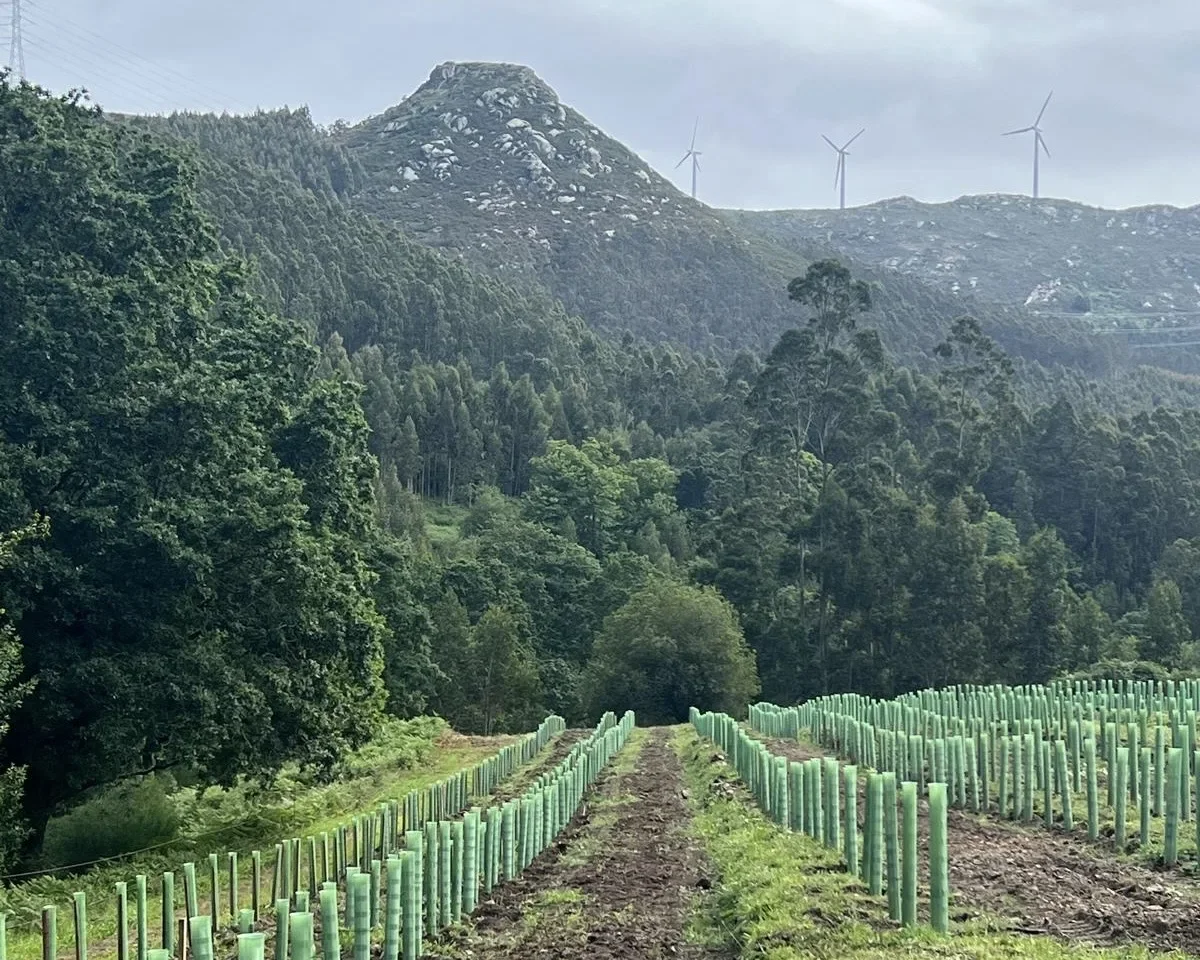
While we might think of climate change today as making it more difficult to grow vines, there are a few pockets of the world where the opposite is true. The south of England, for example, has seen a huge boom in sparkling wine production as rising temperatures push the traditional latitudes suitable for grape growing ever northward.
Galicia is another place predicted to see positive effects from a warming planet. Unlike most of Spain, where up to 90% of traditional wine-growing regions could be at risk of disappearing by the end of the century if global warming exceeds 2°C, Galicia’s (relatively) cooler temperatures are already making it an increasingly attractive environment for viticulture. Wineries from Rioja, Ribera del Duero, and Catalunya have all added Galician bodegas to their portfolios in the past several years, drawn by the prospect of making the fresh, light white wines that are becoming ever-popular among those who still drink wine.
But even within Galicia, conditions are changing. Conventional wisdom long held that for certain grape varieties–especially the traditional red grapes grown for centuries in Rías Baixas such as Espadeiro–getting above 10% ABV was the sign of a great vintage. Now, producers all over Galicia are dealing with an issue that would be completely foreign to their ancestors: making sure their grapes don’t ripen too much. More producers are turning to green pruning and vineyard work to control ripening, and the timing of harvest shifts earlier and earlier each year. It’s also raining less than it used to, creating conditions for dangerous wildfires and putting water stress on vines. And as temperatures rise, so do the risks from mildew or pests that spread diseases like flavescence dorée, which recently affected swathes of vineyards around the Ribeiro and Condado do Tea regions.
It’s clear that business as usual isn’t going to work in the future. So as the accepted thinking on how to grow grapes in Galicia gets turned upside down, why not also test the limits of where to grow them?
That’s the aim of the first modern vineyard on the province of Lugo’s northern coast. Known as A Mariña Lucense, or simply A Mariña, Lugo’s northern coast is more wild and rugged than the soft, rolling coastal inlets of Rías Baixas to the south. It has an oceanic climate influenced by the Cantabrian Sea, with mild winters, cool summers, and fairly high rainfall throughout the year. It’s also not unfamiliar with grape-growing: according to historian Alain Huetz de Lemps, the area had quite a significant viticultural landscape that peaked in the 14th and 15th centuries and lasted until the mid-1800s.
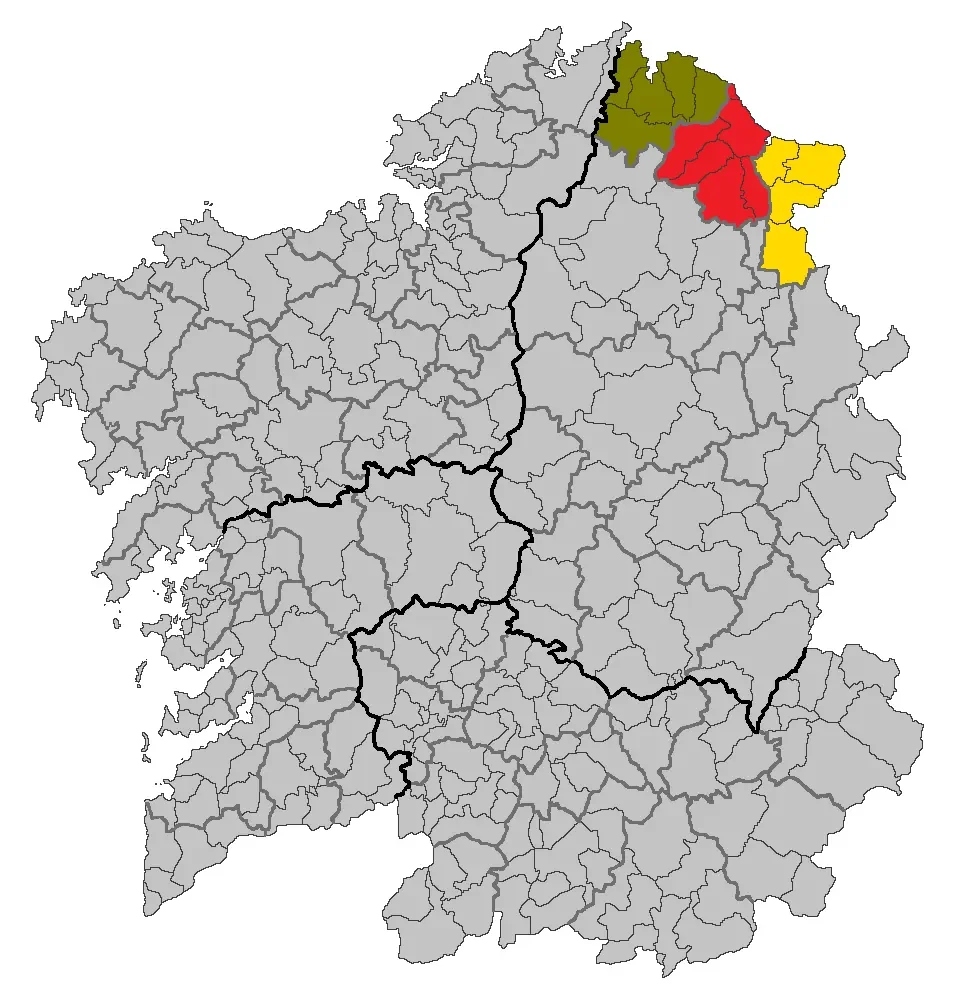
A Long Viticultural History
Huetz de Lemps writes that in the 14th century, vineyards in A Mariña “expanded sufficiently for the two ports of Viveiro and Ribadeo to export wine in exchange for foodstuffs, cloth, and other goods… By the end of the Middle Ages, Viveiro had enough vineyards to meet local consumption needs and also export wine.”
But around the 1850s, powdery mildew appeared, and caused what Huetz de Lemps classifies as “total disaster.” Faced with the onslaught of the plague and the region’s high humidity, growers uprooted their vineyards and replaced them with wheat, corn, potatoes, and other vegetables. By 1865, not a single hectare remained.
The Climes They Are A-Changing
A century and a half later, Antonio Seijas is bringing viticulture back to A Mariña. A retired Galician businessman who ran hotels Palma de Mallorca for most of his career, Seijas purchased the property that now holds his vineyard in the 1990s, but it wasn’t until a few years ago that he considered planting vines. He believes rising temperatures could create opportunities to revive viticulture in northern Lugo: climate change is very noticeable in A Mariña, he says. “It rains less. We no longer get those heavy snowfalls we used to have in the old days, when I was a child. They're gone. There are no frosts on my property like there were five or six years ago… Things are changing.”
After studying the land, the climate, and the hours of sunshine, he planted his first vines. Antonio explains that the vineyard was planted in several stages. In 2021 and 2022, he planted Godello and Albariño in the lower part of the property, continuing to add vines each year. The estate now has four hectares under vine, and he plans to clear and prepare an additional section of land to expand the vineyard further. In the spring, he hopes to introduce another grape variety, perhaps from the Ribeiro region.
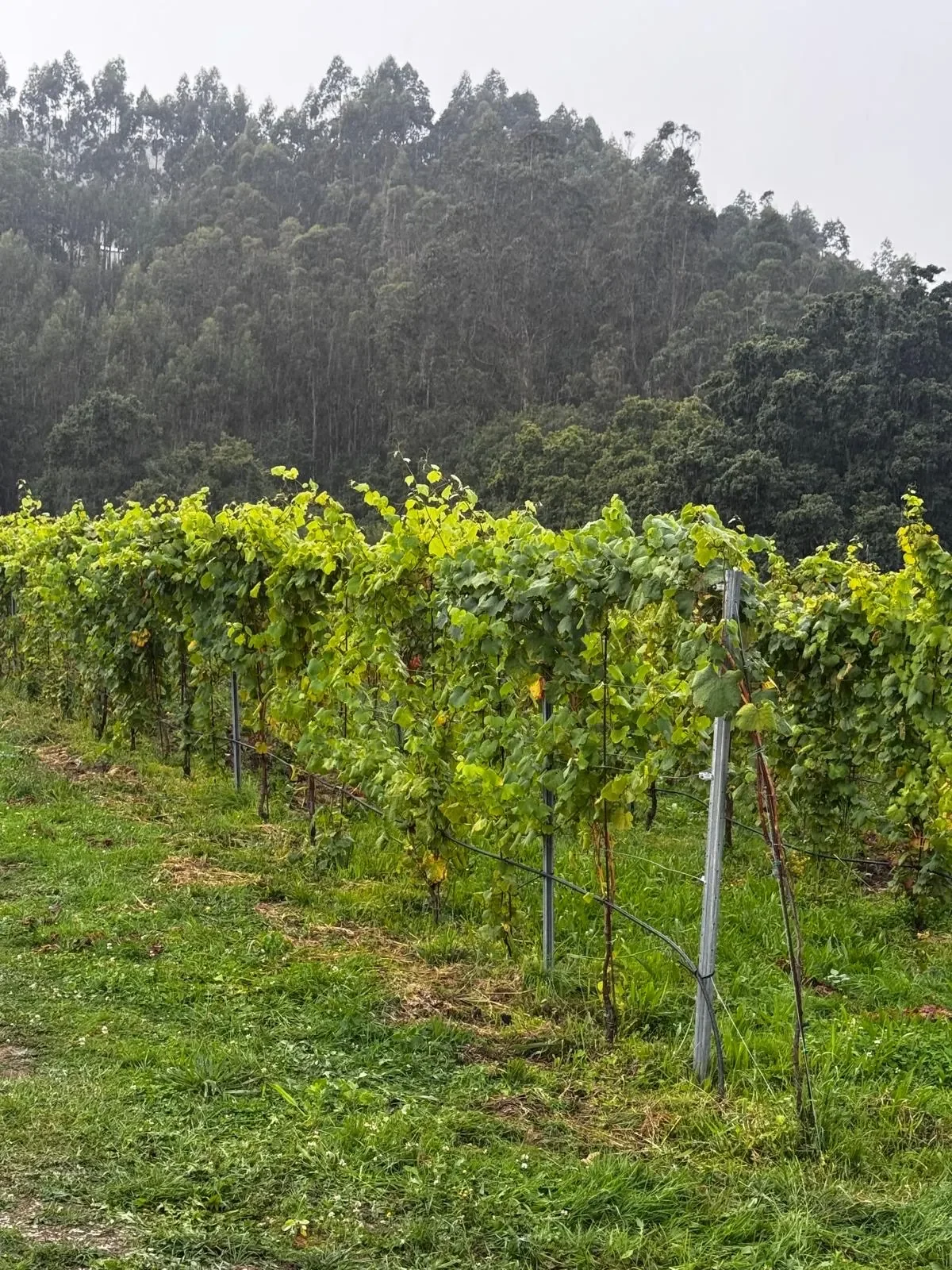
The vineyard is surrounded by eucalyptus trees, a far more common cultivar in this part of Galicia
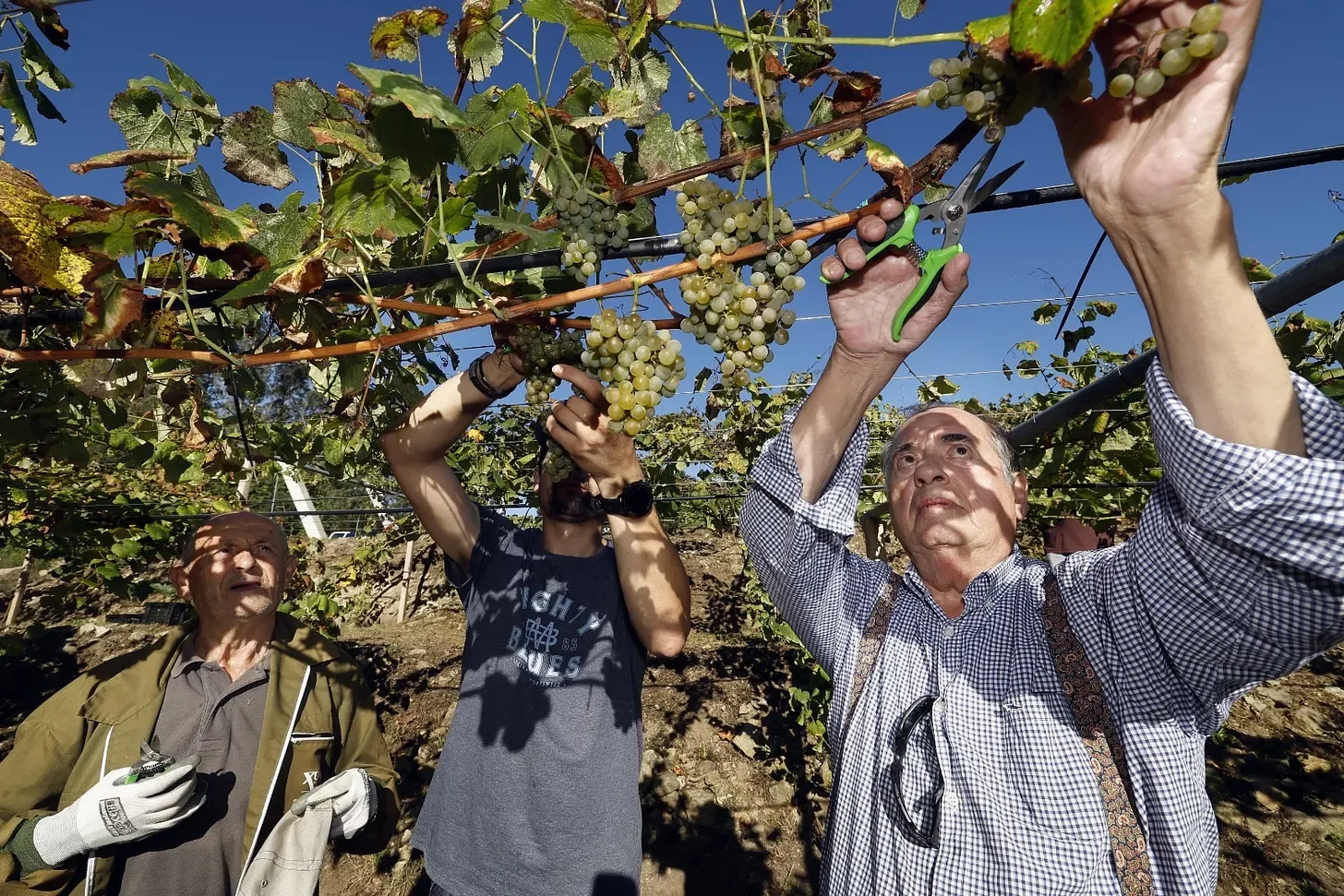
The vineyard, called Finca A Azoreira, is located in the village of O Valadouro, in a sheltered valley that protects it from the cold winds coming off the Cantabrian Sea and reduces the likelihood of late frosts. This year, they had their first harvest under the guidance of Carlos Blanco, winemaker of Adegas do Rexurdir in Ribeiro, and they expect to produce around 1,000 bottles. Antonio’s aim is to limit the project to a small-scale winery, but hopes that it could open the door for others to create their own projects here—once they get past the skeptical locals, that is.
“The funniest thing was one time when I was having a coffee,” Antonio tells me. “There were three or four people sitting nearby who didn’t know me, and they were saying, ‘Come on, this guy is completely nuts. He's crazy. He thinks the climate here is the same as in Mallorca... This guy must have a lot of money because he's not going to get a single damn grape out of that vineyard.’ Well, when five minutes had passed, I said to the waitress, ‘Listen, these gentlemen's coffees are on me, because when the wine comes out, they'll have paid for a bottle.’ They were left there in shock!"
Although Antonio is alone in O Valadouro, it’s not out of the question for the north of Galicia to become a new hot spot for winegrowing in the coming decades. The province of Lugo gained its own IGP, Terras do Navia, in 2023. Located in the extreme east of Galicia in the Ancares mountains, it began with three producers but continues to grow. Betanzos, another north coast IGP close to the city of A Coruña, has also experienced its own renaissance over the last few years, and a few growers have talked about pushing northward and planting vines near the outskirts of the coastal city Ferrol.
Antonio told the publication Campo Galego that he thinks it would make the most sense for the wine to be sold locally. Since his project is a first for the region, he wants to associate wine made in A Mariña with the local food and hospitality industry–the area’s reputation as a cool-climate summer destination would go well with the idea of freshness that has made wines from Galicia so popular. “But they say you’re never appreciated in your own backyard,” he says, “so if it doesn’t sell here, I’ll sell it in Mallorca.”