
The Landscapes We Leave Behind
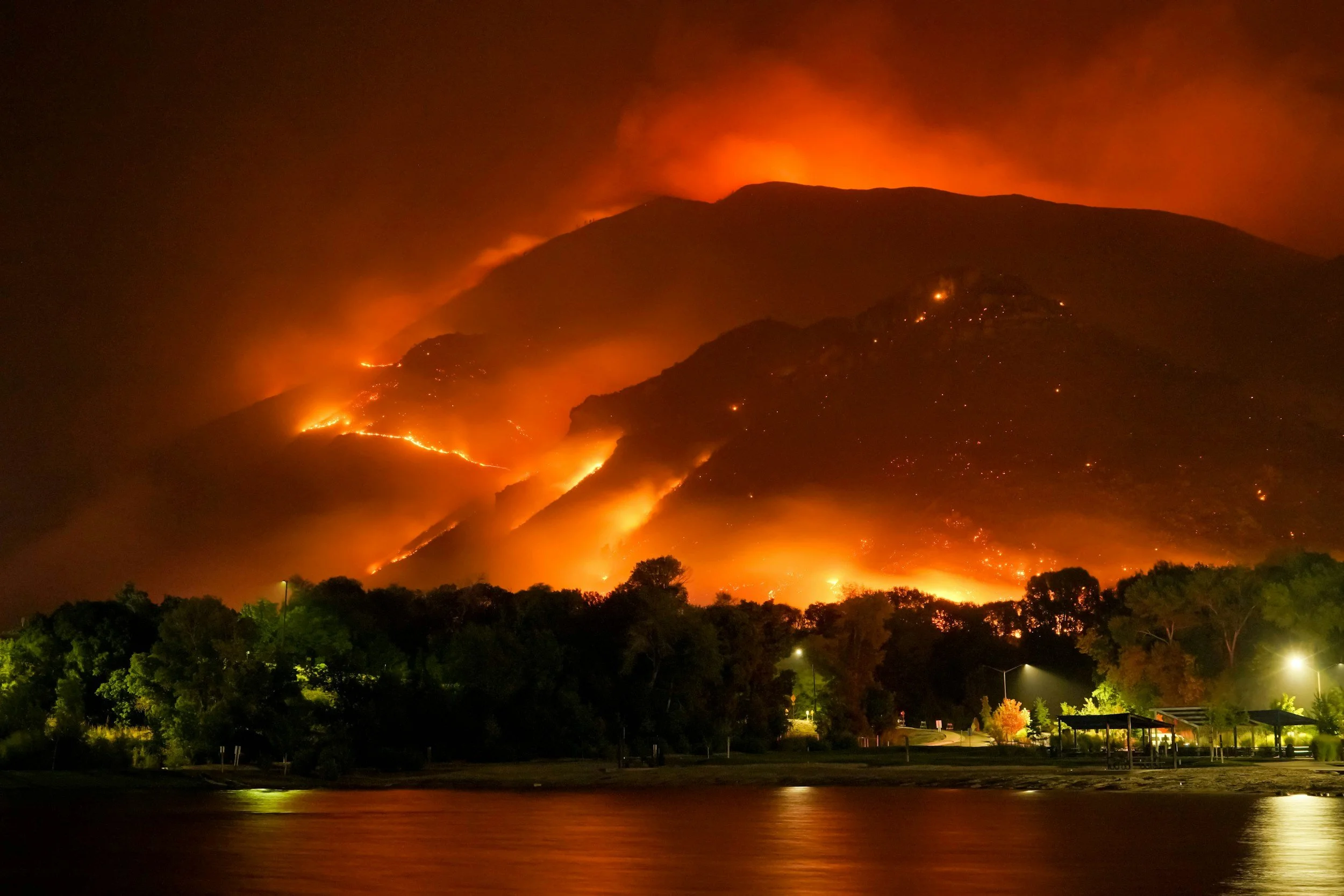
Lately I’ve been thinking about wildfires. It’s been hard not to: my commute home a couple of weeks ago was punctuated by ashy skies and the smell of smoke, and my news feed has been filled with pictures of smoldering forests and burnt vineyards. This summer, it’s not Galicia on fire, but central Spain. Wildfires have burned over 50,000 hectares around the Sierra de Gredos in what’s being called Spain’s largest and most destructive wave of fires on record.
At home, it’s the second time in four years that smoke from Canadian wildfires has blanketed the East Coast, turning the sky an apocalyptic shade of orange. Yet no one around me seemed to bat an eye as the subway car crawled its way above ground into the strange, hazy twilight, or as the doors opened to the smell of fires burning 1,000 miles away. Sure, New Yorkers are trained to greet everything with a cultivated sense of indifference, but I have to wonder if we’ll ever get used to this.
I’m also thinking about wildfires because a piece I wrote last September about the devastation they caused in Valdeorras and my friend Nacho’s frustration with the government’s lack of action is a finalist for a 67 Pall Mall Global Wine Communicator Award. It’s an honor to be recognized, but it doesn’t make subject matter any less grim: our capacity to become desensitized to anything often wins out in the end.
“What has this administration been doing, investing nothing in fire prevention for 40 years? I’ve got photos of this area from 2013, from the last time it burned. Twelve years later the same place burns again. Let’s be clear: land management is nonexistent. We’re totally abandoned.”
Is that independent of the political party? I ask.
“But it’s always the same ones who win!” he says.
Out of sight, out of mind—until it’s right in front of our noses, and even then, we don’t seem to have a very long memory. Each year, wildfires tear across Galicia‘s forests and mountains. Every year, people are met with destruction and terror. And each year, nothing changes.
A friend of mine whose family lives in New Jersey told me his mom got a letter from the village in Galicia where they still own land, telling them that they needed to get rid of the weeds and brush on their plot. If they didn’t want to pay for someone to do it, the local council would, and charge them back as part of a fire-control initiative.
That’s all well and good for the villages, but it’s the vast swathes of unmanaged land in Galicia’s interior that end up burning. With half the land still technically owned by people who’ve long since emigrated to God knows where and the other half owned by old people who can’t manage their land anymore or sell to absentee corporations that plant it with flammable eucalyptus trees, the summer heatwaves and droughts that increasingly batter Galicia create the perfect environment for fires to ignite and spread quicker than they can be put out.
Rural Galicia is a tinderbox.
Every time this happens, there are think pieces about what needs to change. In many of them, “La España Vaciada,” —literally “The Emptied-Out Spain”— is often to blame. The breakup of the traditional patchwork of forests, vineyards, pasture, and cultivated fields leaves wide stretches of easy fuel that let fires race across the countryside, so a solution to this problem is to stop the abandonment through more people going back to the land and taking better care of it.
This was shown in practice last year in Galicia, when some vineyards acted as firebreaks, stopping the wildfires from consuming even more in their path. It’s an undeniable truth: cultivated land is less likely to burn. But the people working the land don’t exist in a vacuum. The key to stopping these fires is incentivizing people to stay in the countryside by making sure they can make a living from rural life. Winemaking is an essential part of that effort.
The challenge facing current and would-be winegrowers in Galicia and the rest of rural Spain at the moment is that their vineyards are affected by a warming climate and chaotic natural forces. The trend toward earlier harvests has become more common as a consequence of climate change; this year, the Canary Islands, Jumilla, Montilla-Moriles, Huelva, and Catalunya have already begun to harvest much earlier than is typical.
Galicia is also preparing for an unusually early harvest, and some growers expect to begin picking grapes as soon as the third week of August.
Last year, growers in Valdeorras began harvesting on August 22, which could be repeated, or even brought forward this year. 2026 is expected to be a particularly productive vintage—initial forecasts put Galicia’s grand total at 81 million kilograms (about 89,000 tons) of grapes—but a sudden freak storm before harvest could sweep it all away.
Preserving rural livelihoods is part of the solution to reducing the risk of catastrophic wildfires, but those livelihoods now have to adapt to increasingly unpredictable conditions. The question for the coming years will be if the countryside can remain both economically viable and disaster-resistant in a changing climate. I think I know the answer to that one, too. The landscapes we love can only endure if someone is there to care for them.
The future will be decided by the people willing to come back year after year, tending the land long before the first flame flickers into being and long after the smoke has cleared. But they can only endure so much as consumers and wine lovers enable them to. It’s also up to us to come back year after year, supporting the people doing the work on the ground and keeping these landscapes alive.