
Can Drones Save Heroic Viticulture?
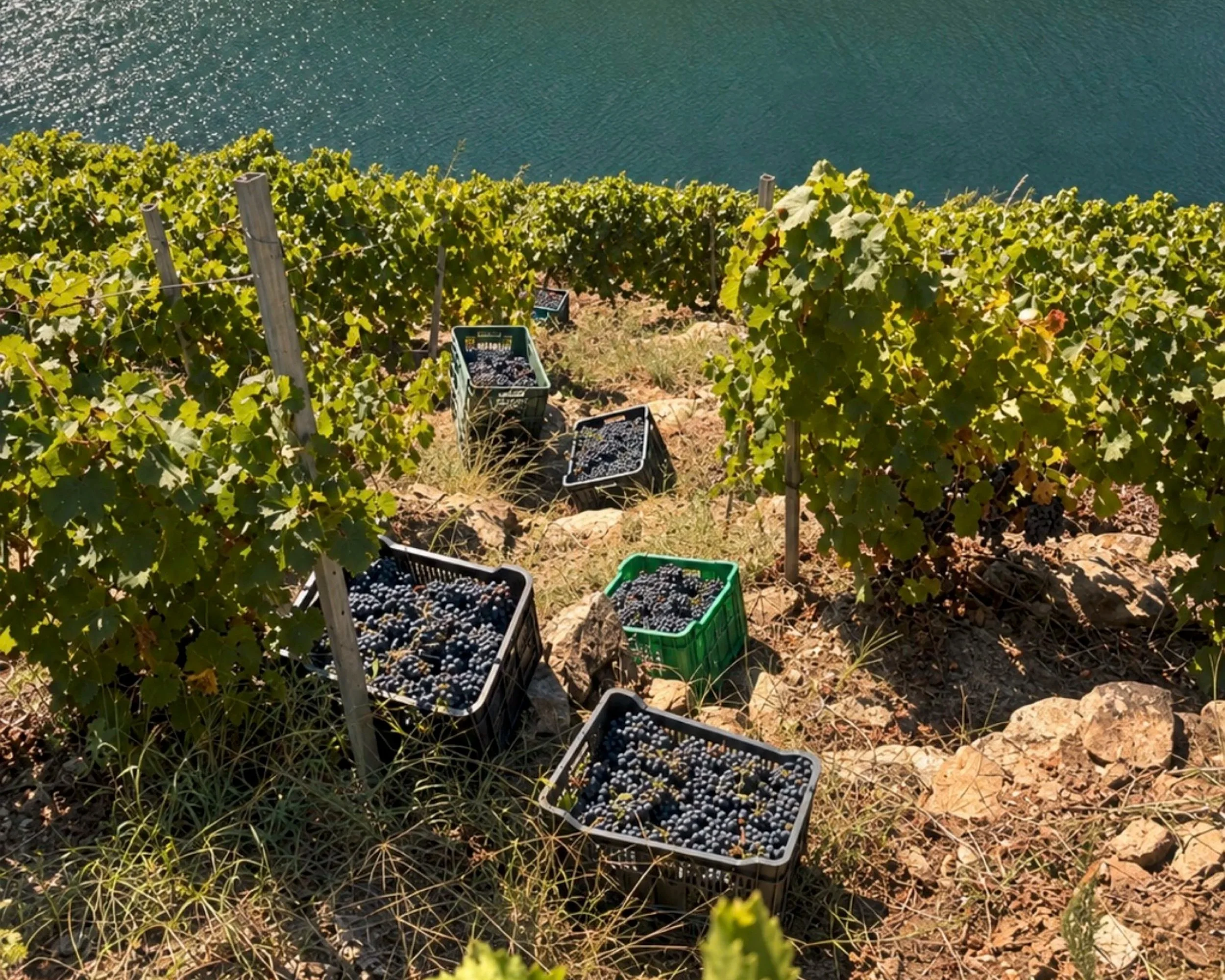
Photo by Adega Vella
Normally, harvesting a 12-hectare vineyard farmed by Ribeira Sacra winery Adega Vella would take two and a half days of back-breaking labor. The unforgiving terrain, which averages 60% incline but often reaches near vertical in some places, means using any machinery in the vineyard is impossible. During a normal harvest, grape pickers have to hoist 20-kilo boxes of grapes onto their shoulders, and haul them 60 meters (200ft) of straight incline to load them into a tractor waiting on the road above.
This year, they have a little help. For the first time ever, some wineries in Ribeira Sacra are harvesting with the help of drones.
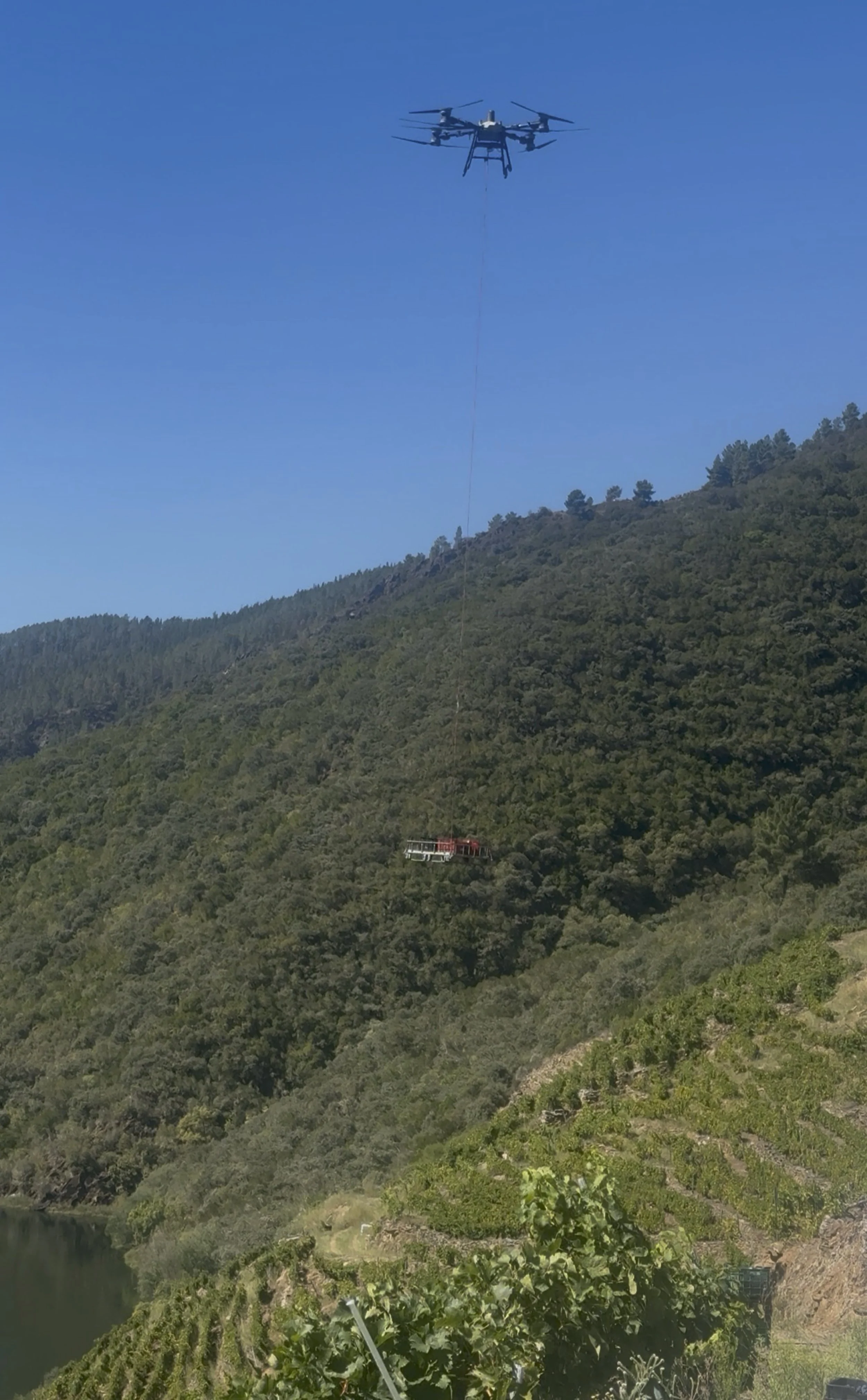
Photo by Adega Vella
“We doubled our productivity in terms of kilos per person per day,” says Yago Feijóo Borrajo. The third generation of Adega Vella, a small winery in the village of A Teixeira, at 26 years old he’s one of the youngest people making wine in Ribeira Sacra. His own future is closely tied to Ribeira Sacra’s, and he has “absolutely no doubt” that drone technology is one of the best things that could have come to Ribeira Sacra.
This year, Adega Vella is using one drone, operated by a local company, to transport grapes from a vineyard they farm on the banks of the Sil River to the winery. The drone carries four 20-kilo boxes of grapes per trip, and can move around 1,500 to 2,000 kilos per hour, Yago explains. The system is designed with several batteries, so they can keep working continuously for as many hours as needed.
The technology is revolutionary. But won’t drones eliminate jobs? And what about the idea of heroic viticulture? Doesn’t that kind of imply back-breaking labor?
It won’t eliminate jobs—instead, it might even create them, Yago insists. Adega Vella has 10 permanent employees working in the vineyards throughout the year, and hires seasonal workers from service companies for harvest.
“You still need the same number of people for the harvest, but the drone complements them,” he says. “It's still the same job, but it's less physically demanding. What will benefit us is having the same workforce but not wasting time climbing up and down the slopes,” he says.
And as far as heroic viticulture goes, “romanticism and poetry are great, as long as you can make a living from them and they're sustainable,” he says. “Nowadays there are fewer and fewer people who want to do this kind of work. It's one of the few jobs that’s still almost entirely manual because of the difficulty of the terrain. You can't bring machines into many of these places. So any technology that comes along is only going to make things better.”
He has a point: where do we draw the line? Do the rail systems installed in some vineyards to save workers from having to climb slopes make the work less heroic? What about electric secateurs?
“They said that once the tractor came in, it would mean the end of people working in the fields by hand. But what actually happened was that people lived better, harvested better, and were able to work more,” Yago says.
But it's also true that there aren't that many farmers left in the countryside, I counter. So in a way tractors did bring an end to some of that work.
“Sure,” he says, “but they moved on to something else. I mean, it's a transformation like any other. Ultimately, the romanticism of Ribeira Sacra isn't going to disappear, no matter how much you automate it. What defines the wines of Ribeira Sacra is the terroir, the orientation, the amount of sunlight the vines get on those terraces. All you're doing is making the work more manageable, so that people genuinely consider coming to work here instead of seeing it as the last job they'd choose because of how difficult the terrain and working conditions are.”
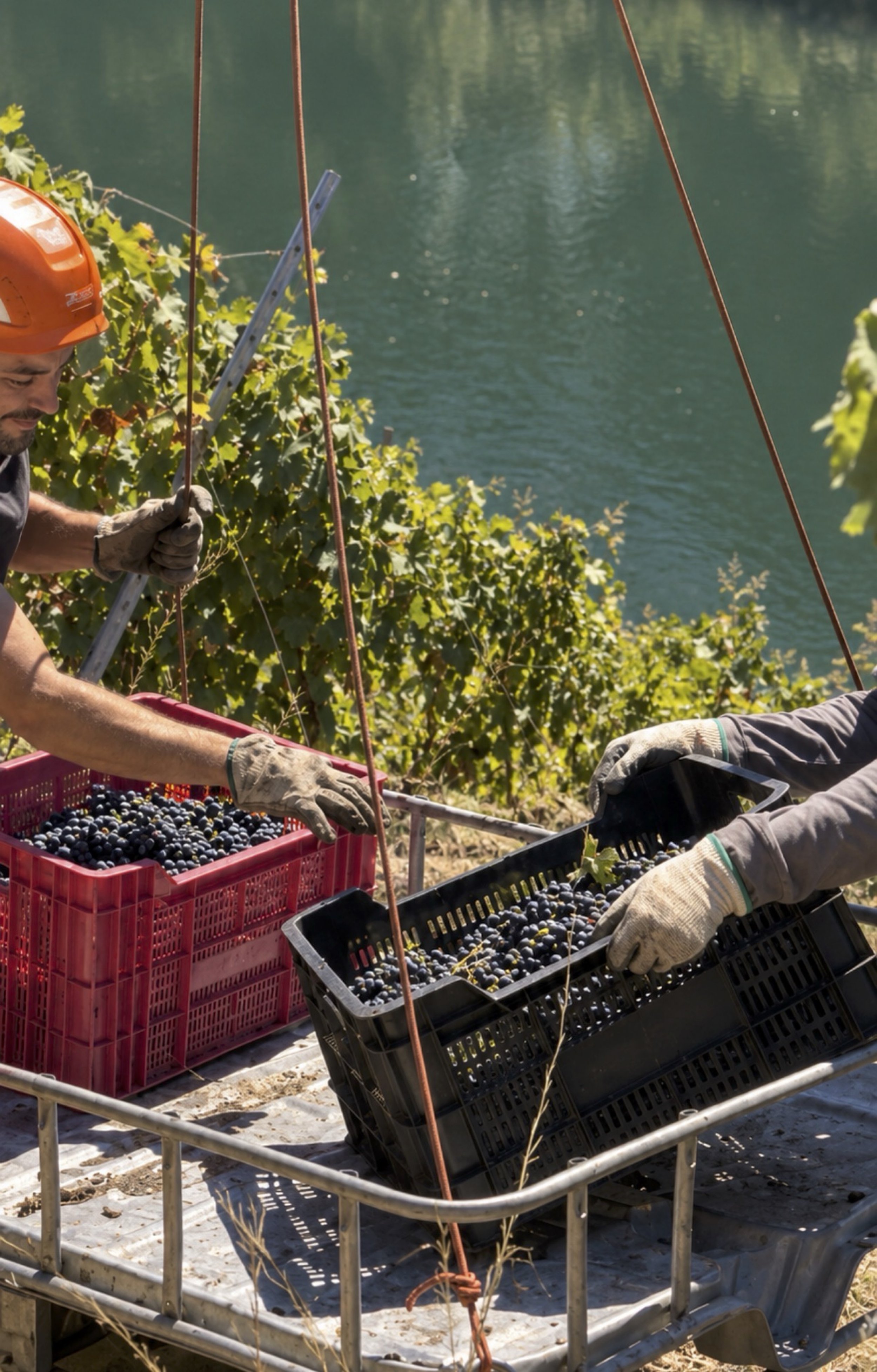
Photo by Adega Vella
Then there's the issue of being competitive in the market, he says. “For us, the production cost of grapes can reach around €2 per kilo in some years. Drones will bring the cost down, but it's not just about reducing costs. It's about the efficiency you gain when you have a problem, a disease, or you need to apply a treatment. You can respond immediately. You don't have to wait seven days to get around to every vineyard. You can act the same day.
In the end, Yago believes better management = better wine. And apart from improving the wine, he predicts that “drones will help us grow and expand because we can manage more vineyards and create more jobs. On top of that, we can attract young people into the sector, people who genuinely believe in it and are willing to invest in it.”
Staring down the barrel of a future in which the population drains away a little more each year and the average grower is 65 years old, it’s no wonder Yago is optimistic about the new tech. For him, the promise of the drone isn't in replacing the workforce, but in making it possible for the people like him to do more with less. New technology alone can't save a wine region. But hopefully, with the right mix of technology and humanity, heroic viticulture will continue to thrive.